Technological evolution and human degradation: are we progressing?
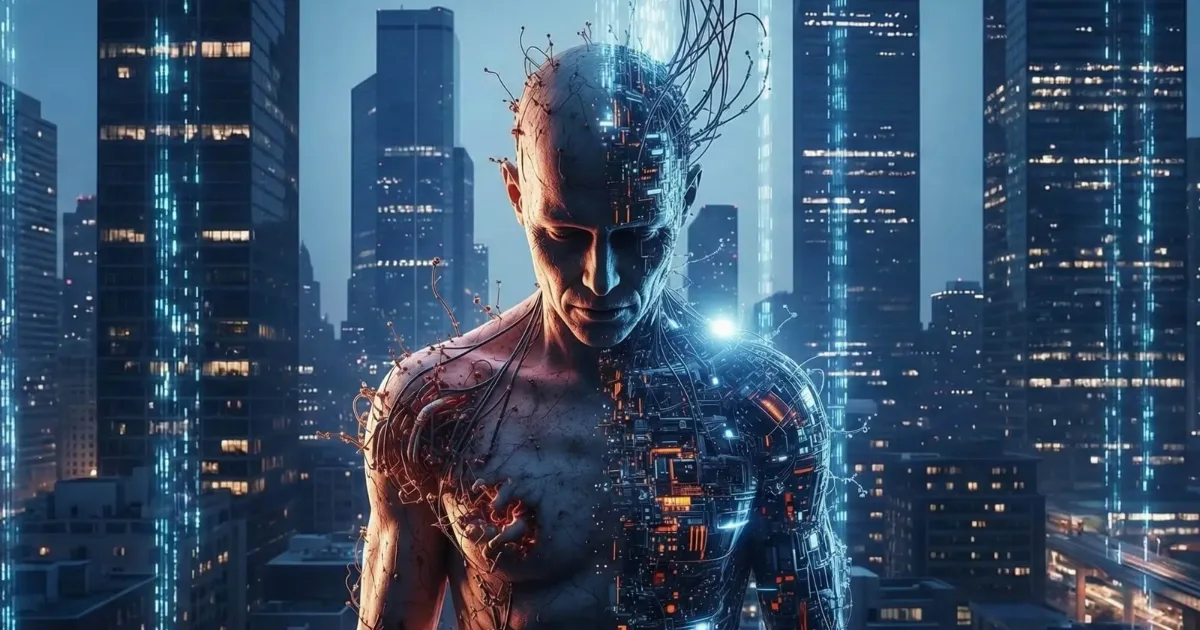
Are we moving forward or backward as a species? The relationship between technological evolution and human degradation is one of the most unsettling paradoxes of our time. We live in the most connected, most automated and most informed era in history. Rates of anxiety, loneliness, misinformation and technological dependence keep rising. In this analysis we explore whether technological progress is making us better or atrophying the capacities that define us as human beings.
Technological evolution and human degradation: the paradox of progress
This debate is not new, but it has taken on unprecedented urgency with the arrival of generative artificial intelligence. Every technological revolution —the printing press, electricity, the internet— generated similar fears. However, the fundamental difference is that earlier technologies expanded our physical capacities, whereas AI intervenes directly in our cognitive ones.
Amplification vs. substitution
In addition, there is a crucial difference between a technology that amplifies what we do and one that replaces it. A car lets us go further, but we do not forget how to walk. The central question is whether AI is amplifying us or replacing us in the functions that matter most: thinking, deciding, creating and relating to others.
Technological evolution and human degradation: the impact on attention
One of the most documented effects of this tension is the attention crisis. According to a study by Microsoft Research, sustained attention span has decreased significantly over the last two decades, coinciding with the proliferation of connected devices.
The distraction economy
For this reason, we live in what some researchers call the “attention economy”: an ecosystem where digital platforms compete for every second of our time. In addition, recommendation algorithms are designed to maximise engagement, not wellbeing. Infinite scroll, constant notifications and hyper-fragmented content train our brains for superficiality, not depth.
Multitasking and cognitive performance
Digital multitasking —constantly switching between apps, tabs and conversations— generates what neuroscientists call “task-switching cost”: every interruption requires time and energy to regain concentration. The illusion of productivity that technology offers masks a real loss of cognitive performance.
Technological evolution and human degradation: relationships and empathy
Without doubt, another area where this tension shows most clearly is interpersonal relationships.
Digital connection, human disconnection
Paradoxically, the more digitally connected we are, the more isolated we feel. According to the WHO, loneliness is already a global epidemic with direct consequences for physical and mental health. On the other hand, social media replaces deep conversations with superficial interactions: likes, brief comments and instant reactions that simulate connection without actually providing it.
Empathy and screens
In addition, several studies suggest that intensive screen use reduces empathy, especially in young people who are forming their social skills. Because of this, communication mediated by text and emojis lacks the nuances conveyed by voice, facial expression and body language. Technology lets us talk to anyone at any time, but it is un-teaching us how to truly listen.
Technological evolution and human degradation: autonomy and independent thought
On the other hand, this phenomenon directly affects our ability to think autonomously.
Algorithms that decide for us
Recommendation algorithms do not just show us content: they shape our preferences, our opinions and our consumption decisions. We increasingly delegate judgements to systems that prioritise statistical relevance over human criteria. Algorithmic echo chambers reinforce our existing beliefs and reduce our exposure to different perspectives, impoverishing public debate.
AI and creativity
Finally, creativity also comes into play. When AI can generate texts, images, music and code, what is left for us to create? The answer is that what is left is the most important part: intention, judgement and meaning. If we do not actively exercise these capacities, the risk of atrophy is real. Human creativity needs to be defended as a conscious practice, not as a process to be delegated.
Technological evolution and human degradation: how to recover the balance
This dynamic is not inevitable. It is the result of decisions —individual, corporate and political— about how we design, adopt and regulate technology.
Conscious use of technology
To recover the balance, the first step is awareness. In addition, setting deliberate limits on screen use, practising deep reading, holding conversations without devices and questioning AI outputs before accepting them are habits that protect our cognitive autonomy. It is not about rejecting technology, but about using it with intention instead of letting it use us.
Regulation and ethical design
The responsibility does not fall on the individual alone. Technology companies must design products that respect users’ attention and wellbeing rather than exploiting them. According to UNESCO, the recommendations on AI ethics include the protection of cognitive autonomy as a fundamental right. Regulation has an essential role in ensuring that technology serves human beings and not the other way round.
In conclusion, technological evolution and human degradation is a tension that defines our era. We are not condemned to atrophy, but neither are we protected by default. The decision to be the owners of our attention, our relationships and our thinking is probably the most important one we will make in this era.
Along the same reflective lines: the cognitive footprint of AI and from Ibertex to AI.
Are you taking AI from pilot to real work? Let us talk.
Book 20 minutes