The cognitive footprint of AI: how AI transforms our mind
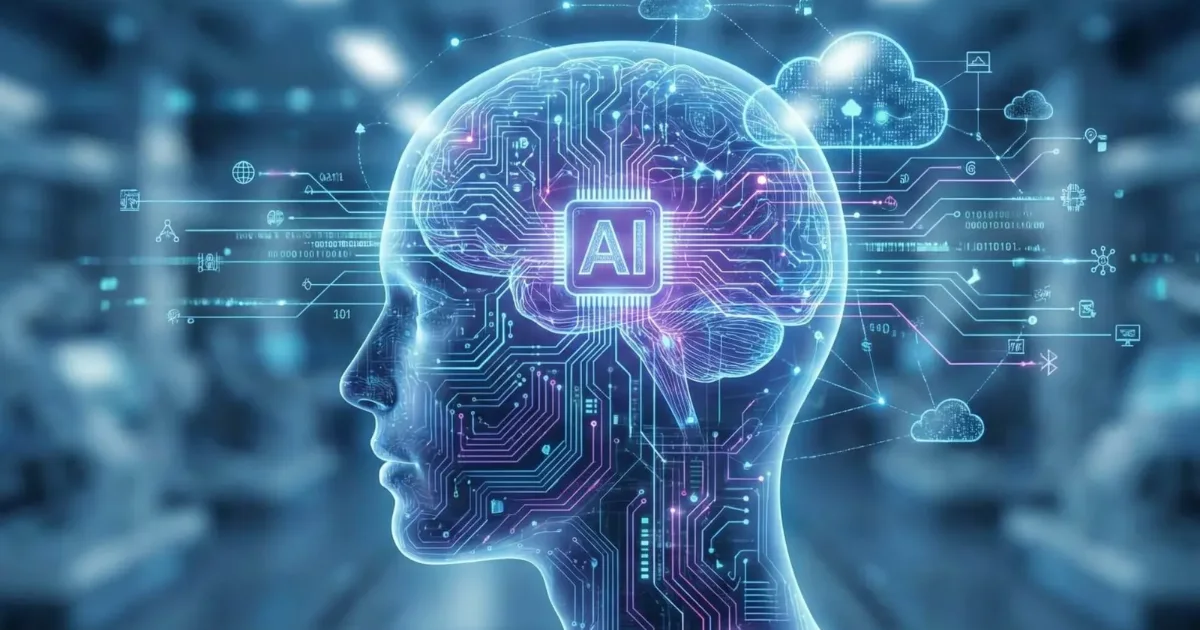
Are we delegating too much to machines? The cognitive footprint of artificial intelligence is the impact that the continued use of algorithms and AI systems has on our ability to think, learn, remember and make decisions autonomously. Unlike the carbon footprint or the digital footprint, this footprint is invisible: we do not see it until its effects are already deep. In this article we analyse what this footprint is, how it affects us and what we can do to keep control over our own cognition.
The cognitive footprint of AI: what it is exactly
This concept refers to the changes our way of processing information undergoes when we depend on AI systems for tasks we used to do with our own brains: searching for information, drafting texts, making decisions, finding our way around a city or even holding a conversation.
The Google effect, amplified
What is more, this phenomenon is not entirely new. Psychology already documented the “Google effect”: our tendency not to memorise information we know we can easily find in a search engine. However, with generative AI the effect is amplified. We no longer just delegate memory: we delegate reasoning, synthesis, creativity and critical judgement. This footprint is qualitatively different from the one produced by earlier technologies.
The cognitive footprint of AI: how it affects critical thinking
The most worrying impact of this footprint is the erosion of critical thinking. When an AI system offers us an articulate, well-written and apparently complete answer, the temptation to accept it without question is enormous.
Automation bias
In addition, cognitive psychology describes this phenomenon as “automation bias”: the tendency to trust a machine’s answer more than our own judgement. According to a study published in Nature, users tend to accept AI outputs even when they contradict their own prior experience. For this reason, this phenomenon does not only make us more comfortable: it can make us more vulnerable to misinformation and to model hallucinations.
Skill atrophy
On the other hand, skills that are not practised atrophy. If we stop writing because AI writes for us, stop calculating because AI calculates for us, or stop researching because AI summarises for us, those capacities gradually deteriorate. Dependence creates a vicious circle: the more we delegate, the less capable we feel of doing things ourselves, and the more we delegate.
The cognitive footprint of AI: impact on learning
Without doubt, education is one of the areas most affected by this phenomenon. Students who use AI to complete assignments without understanding the process lose the chance to develop the competencies those assignments were designed to train.
Learning vs. getting answers
There is a fundamental difference between using AI as a learning tool and using it as a substitute for learning. For example, asking an AI to explain a concept step by step to understand it better is productive. Asking it to solve an exercise and copying the result without understanding it is counterproductive. The problem is not the tool, but the use we make of it.
The role of educators
In addition, educators face the challenge of designing assessments and activities that cannot be solved simply by delegating to an AI. Because of this, teaching methodologies are evolving towards formats that prioritise process over result: debates, collaborative projects, design thinking and oral presentations that require real understanding.
The cognitive footprint of AI: ethical and social dimension
On the other hand, this phenomenon raises profound ethical questions about individual autonomy and social equity.
The digital cognitive divide
Not everyone has the same ability to identify and manage this footprint. Ultimately, those who lack critical training in the use of AI are more vulnerable to its negative effects. A new divide emerges: the digital cognitive divide, where some citizens keep their capacity for independent judgement while others gradually delegate it without being aware of it.
The responsibility of organisations
Companies and institutions have a responsibility to train their teams not only in the technical use of AI, but in the conscious management of its cognitive impact. According to UNESCO, the recommendations on AI ethics explicitly include the protection of cognitive autonomy as a fundamental right.
The cognitive footprint of AI: how to reduce it
Being aware of the cognitive footprint of AI is the first step to managing it. It is not about stopping using AI, but about using it with judgement and keeping active the capacities that define us as autonomous thinkers.
Practices to maintain cognitive autonomy
Before accepting an AI output, question it: is it correct? Is it complete? What perspective is missing? In addition, alternate the use of AI with manual work: draft texts without an assistant, solve problems without a calculator, research without letting the AI summarise the article for you. On top of that, regularly dedicate time to deep reading, reflective writing and face-to-face conversation — activities that exercise the cognitive capacities AI cannot replace.
Foster, in your professional and personal environment, a culture where questioning AI is not seen as inefficiency but as intellectual rigour. Maintaining this discipline requires conscious effort in an environment that rewards speed over depth.
In conclusion, the cognitive footprint of AI is real, growing and mostly invisible. Recognising it is the first step; actively managing it is what will allow us to remain autonomous thinkers in a world increasingly mediated by algorithms. AI is an extraordinary tool, but our brain remains irreplaceable — as long as we keep using it.
To go deeper: technological evolution and human degradation and AI literacy.
Are you taking AI from pilot to real work? Let us talk.
Book 20 minutes