Platform Engineering 2026: from DevOps to the Internal Developer Platform
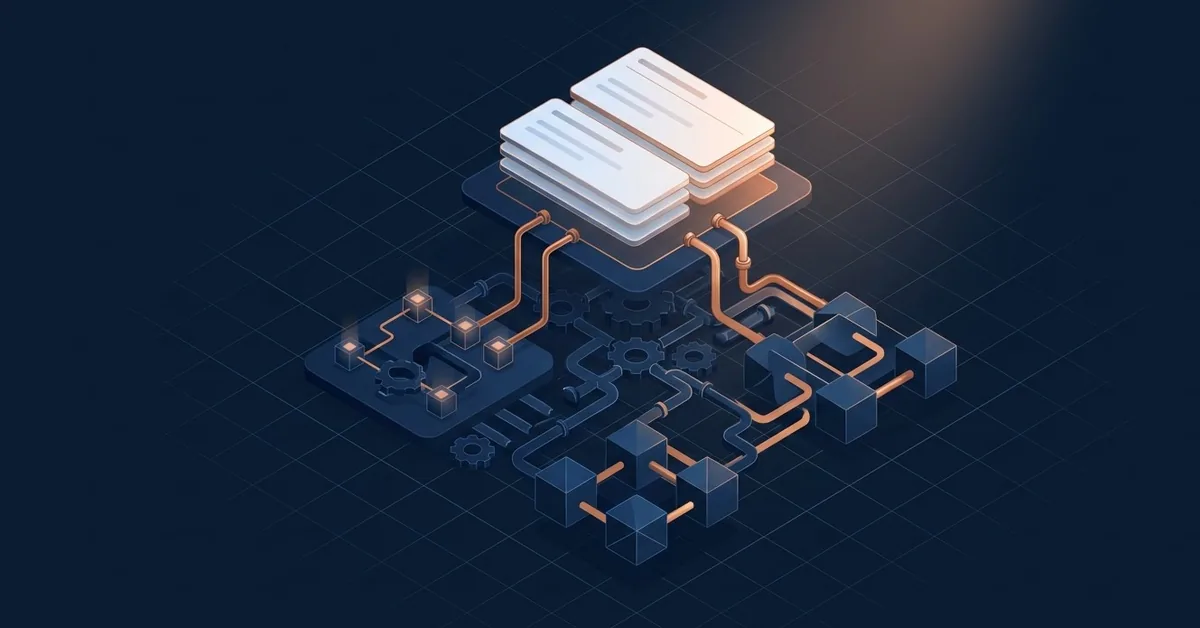
I have been seeing the same pattern for years. One team sets up its CI/CD, another its monitoring, another its secrets in Vault and, three years later, each squad has its own Frankenstein. The conversation about platform engineering 2026 is born precisely from that: to stop asking every developer to be an infrastructure expert so they can focus on what adds value, their code.
The central model is the Internal Developer Platform (IDP). A self-service layer, built by a platform team, that hides the complexity of Kubernetes, IaC, observability and security behind clear templates and APIs. Gartner already places it among the most adopted strategic trends and predicts that 80% of engineering organisations will have a platform team in 2026.
What platform engineering 2026 is and why it matters
The term is not new, but its maturity is. Platform engineering 2026 is about treating the internal platform as a product, with its users (the developers), its roadmap, its adoption metrics and its SLA. The difference from a classic SRE team lies in the focus: it is not only about maintaining infrastructure, it is about building abstractions that reduce the developer’s cognitive load.
The ultimate goal is clear: to reduce the time from “I have an idea” to “it is running in production” without sacrificing governance or security. That connects directly with systems administration in 2026, where the boundary between dev and ops keeps blurring.
Components of an internal platform in 2026
A modern IDP combines several blocks. The developer portal (Backstage is the benchmark) is the entry point: it catalogues services, owners, dependencies and templates. Beneath it, the Golden Paths (predefined, opinionated routes) let you spin up a new microservice with observability, pipelines and policies already configured.
The orchestration layer relies on Kubernetes, GitOps with Argo CD or Flux, and Infrastructure as Code (Terraform, Crossplane). On top, a policy control plane with OPA/Kyverno, centralised secret management and unified observability (OpenTelemetry + Grafana). The IDP does not invent these pieces, it integrates them and exposes them with a coherent experience.
Platform engineering 2026 versus the traditional DevOps model
DevOps promised to tear down the wall between development and operations. It worked partially: developers gained autonomy, but also inherited the complexity of the cloud native. Platform engineering 2026 recognises that most teams do not want to be SREs; they want to deliver features with confidence.
The cultural change is important. The platform team is not a gatekeeper, it is an internal provider whose success is measured by voluntary adoption. If developers prefer to do it on their own, the platform has failed. That is why the DORA metrics (lead time, deploy frequency, MTTR, change failure rate) are the contractual basis of any serious IDP.
Generative AI within the platform: the next level
The real novelty of 2026 is integrating AI assistants within the portal itself. A developer can ask in natural language “I want a new Node.js service connected to Postgres with observability” and the platform generates the repository, the manifests and the pipelines from a Golden Path. Anthropic, OpenAI and Google are already pushing in this direction with integrated tooling.
The challenge lies in governance. AI within the IDP must respect security policies, avoid exposing secrets and leave traceability. If you want to go deeper into how to control this vector, I address it in MCP in enterprise projects, where I explain how to connect AI to internal systems without losing governance.
How to get started with platform engineering 2026 in your company
The first step is not to buy tools. It is to interview the developers to identify their three biggest daily frictions. From there you build a platform MVP focused on solving those frictions, not on replicating Spotify. The platform grows through iterations, not through a big bang.
Metrics to justify the investment in the platform
The second step is to define success metrics. Average onboarding time for a new service, % of teams using the Golden Paths, internal NPS of the platform. Without metrics, the platform team becomes a cost with no justification. With metrics, it justifies its investment every quarter.
Frequently asked questions about platform engineering 2026
Platform engineering 2026 is the discipline of building a self-service internal platform that abstracts the complexity of cloud-native infrastructure for development teams. It combines Kubernetes, GitOps, IaC, observability and portals such as Backstage into a coherent experience, treated as an internal product with its own users and metrics.
DevOps is a culture that unites development and operations. Platform engineering is a practice that materialises that culture through an Internal Developer Platform: instead of asking every developer to learn Kubernetes and Terraform, the platform team builds reusable abstractions. It coexists with DevOps, it does not replace it.
The usual pieces are: Backstage or Port as the developer portal, Argo CD or Flux for GitOps, Terraform or Crossplane for IaC, OPA or Kyverno for policies, OpenTelemetry and Grafana for observability, and a secret manager such as Vault. The key is not the list, but integrating them into coherent Golden Paths.
With DORA metrics (lead time, deploy frequency, MTTR, change failure rate), average onboarding time for a new service, the percentage of teams using the Golden Paths and the platform’s internal NPS. If adoption is not voluntary, the platform has failed.
No. You can start with two or three engineers focused on solving the developers’ three biggest frictions. The platform grows iteratively based on adoption and feedback, not as an initial big bang.
A migration that cannot stop the business? That is what I have done for thirty years.
See the nine case studies