IT project management 2026 trends: AI, regulation and agility
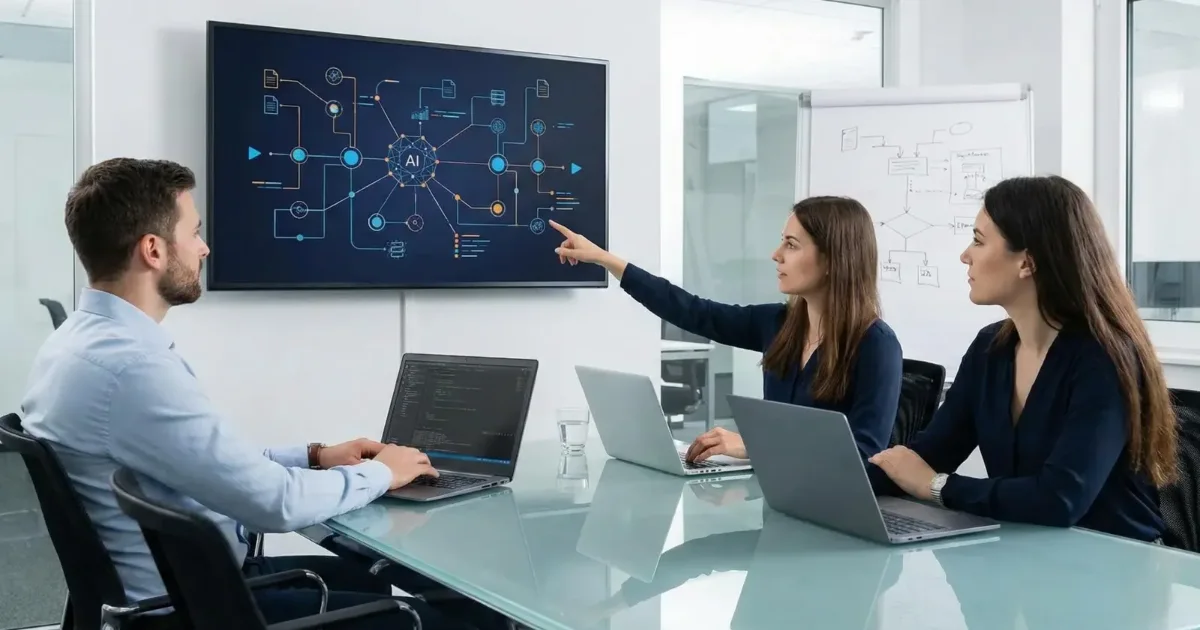
In today’s landscape, IT project management 2026 faces an unprecedented paradigm shift. Artificial intelligence is no longer an add-on: it is the central engine of planning, execution and control in technology projects. This transformation is not limited to technology. New regulatory demands, the push for sustainability and the evolution of agile methodologies are completely redefining the profile of the project leader. In this analysis we explore the trends shaping our profession this year.
IT project management 2026: the new paradigm
It is essential to understand that IT project management 2026 operates in a context radically different from just two years ago. According to the PMI’s Pulse of the Profession 2024 report, 82% of project leaders believe AI has significantly changed the way they work. Yet only 35% have adopted governance frameworks specific to projects with AI components.
From execution to strategic leadership
This gap between technology adoption and management maturity is the main challenge. The Project Manager of 2026 is not a task manager: they are a strategist who connects technology with business goals, regulation and stakeholder expectations. Technical skills still matter, but critical thinking, change management and emotional intelligence are now equally decisive.
For this reason, anyone who merely coordinates schedules and resources without understanding AI’s impact on their projects will quickly become obsolete. IT project management 2026 demands a hybrid profile that combines technical depth with business vision.
Hyper-automation in IT project management 2026
Hyper-automation has established itself as one of the most transformative trends. Within IT project management 2026, AI can now predict delays before they happen, suggest budget adjustments based on real-time performance and automate the generation of status reports.
Autonomous agents in the PMO
Autonomous AI agents are transforming the project management office (PMO). These tools can analyse project history, identify risk patterns and propose corrective actions without direct human intervention. As a result, response capacity has become practically instantaneous.
If you want to go deeper into how these agents work in practice, I recommend my article on autonomous AI agents in project management and the PMO.
Automated reporting
On the other hand, automatically generating dashboards and executive reports frees the PM from administrative tasks that used to consume hours every week. The Project Manager can focus on high-level strategic decisions, which is where they truly add value. Integrating these tools with platforms such as Microsoft 365 is simplifying workflows. In my guide on the autonomous AI agent with Microsoft 365 I explore this integration in detail.
IT project management 2026: AI and risk prediction
Without doubt, one of the most valuable applications of AI in IT project management 2026 is risk prediction. Machine-learning models can analyse historical data from previous projects —deadlines, cost overruns, incidents— and generate early warnings before problems materialise.
GenAI-specific risks
Integrating generative AI introduces its own risks: model hallucinations, confidential-data leakage, algorithmic bias and over-reliance on unvalidated outputs. For this reason, managing risk in projects with GenAI components requires a specific control framework that goes beyond traditional risk registers.
If you want to go deeper into managing these risks, I recommend my guide on managing risk in IT projects with GenAI. In addition, the ENISA Threat Landscape 2024 report offers a complete view of the emerging threats affecting technology projects in Europe.
The AI Project Manager: a new role in IT project management
The AI Project Manager profile has become the most in-demand in the market. IT project management 2026 needs professionals who not only master classic methodologies but understand how AI transforms every phase of the project lifecycle.
Key skills of the AI PM
This new role demands specific skills: an understanding of machine-learning fundamentals, the ability to evaluate a model’s outputs, knowledge of the regulatory framework (EU AI Act, NIS2, DORA) and the ability to communicate AI’s impact to non-technical stakeholders. Finally, empathy and change management are more valuable than ever, since AI adoption generates resistance in many teams.
If you want to explore this professional profile in detail, I invite you to read my article on the AI Project Manager. Artificial-intelligence literacy is a basic competency every project leader must develop.
IT project management 2026: ethics, sustainability and compliance
Social responsibility and algorithmic ethics have moved to the front of priorities. In IT project management 2026, every AI deployment must be sustainable, transparent and aligned with the organisation’s values. The European regulatory framework imposes concrete obligations that the PM must integrate from the planning phase.
The EU AI Act and project governance
The EU AI Act classifies AI systems by risk level and sets requirements for documentation, human oversight and transparency. The PM must include regulatory classification as another deliverable in the project’s initiation phase. In other words, compliance is not a later add-on: it is a cross-cutting axis.
Regulations such as NIS2 and DORA complement this framework with operational-resilience and incident-management requirements. For a complete overview, see my guide on IT regulations 2026 and my analysis on from delivery to compliance.
IT project management 2026: hybrid methodologies and experimentation
Finally, agile methodologies have evolved towards ultra-flexible hybrid models. IT project management 2026 requires us to experiment constantly with new ways of organising work.
Beyond pure agile
Frameworks such as SAFe, LeSS or Disciplined Agile now combine with Kanban practices, Design Thinking and rapid experimentation. This way, teams can adapt their approach to the nature of each project instead of dogmatically applying a single methodology. If you want to ground it in a concrete case, I develop it step by step in my practical guide to leading an IT project with AI. Integrating AI agents into agile workflows is creating a model where AI acts as one more team member, able to propose estimates, detect bottlenecks and suggest workload redistribution.
AI Forge: applied experimentation
For this reason, I created the AI Forge space, where we test tools that optimise technical execution. Combining a solid technical base with an agile, experimental mindset is the key to leading IT project management 2026 successfully.
Those who ignore these trends will fall behind in a market that does not forgive a lack of innovation. Technology advances relentlessly, and our training must be constant and proactive.
Frequently asked questions about IT project management in 2026
One of the key trends for 2026 is aligning strategy and delivery with OKRs. I develop this in OKRs in IT projects.
The key trends are: (1) integrating generative AI into planning and reporting, (2) hybrid Waterfall-Agile methodologies, (3) regulatory compliance (EU AI Act, NIS2, DORA) built in from the design phase, (4) leadership based on emotional intelligence and data, and (5) PMO automation with autonomous agents.
The AI Project Manager is a hybrid profile that combines classic project management with a command of artificial intelligence. They lead the implementation of AI solutions, manage algorithmic risks, ensure EU AI Act compliance and translate technical capabilities into business value. It is one of the most in-demand roles in 2026.
The EU AI Act classifies AI systems by risk level (unacceptable, high, limited, minimal) and imposes specific obligations for each category: technical documentation, human oversight, traceability, impact assessment and registration in European databases. Project Managers must integrate these requirements from the planning phase.
More questions about IT project management 2026
Hybrid methodologies dominate in 2026: they combine Scrum/Kanban for iterative development with Waterfall disciplines in regulatory and audit phases. Frameworks such as SAFe, LeSS and Disciplined Agile make it possible to scale to complex organisations. The choice depends on the sector: banking and healthcare lean hybrid; startups, pure agile.
The most useful tools include: AI assistants for automatic reporting (Claude, ChatGPT Enterprise), platforms with built-in AI (Microsoft Project Copilot, Asana Intelligence), autonomous agents for the PMO, predictive risk models and team-sentiment analysis tools. The key is to choose tools that comply with the EU AI Act.
- Autonomous AI agents for the PMO
- Autonomous AI agent with Microsoft 365
- Managing GenAI risks in IT projects
- AI Project Manager: leading AI integration
- AI literacy: the skill of the 21st century
- IT regulations 2026: a compliance and strategy guide
- Compliance project management for NIS2
- IT project using artificial intelligence
- OKRs for IT projects with AI
A programme to run with little margin for error? See how I have done it.
See the nine case studies