AI in the SDLC: integrating artificial intelligence into secure development
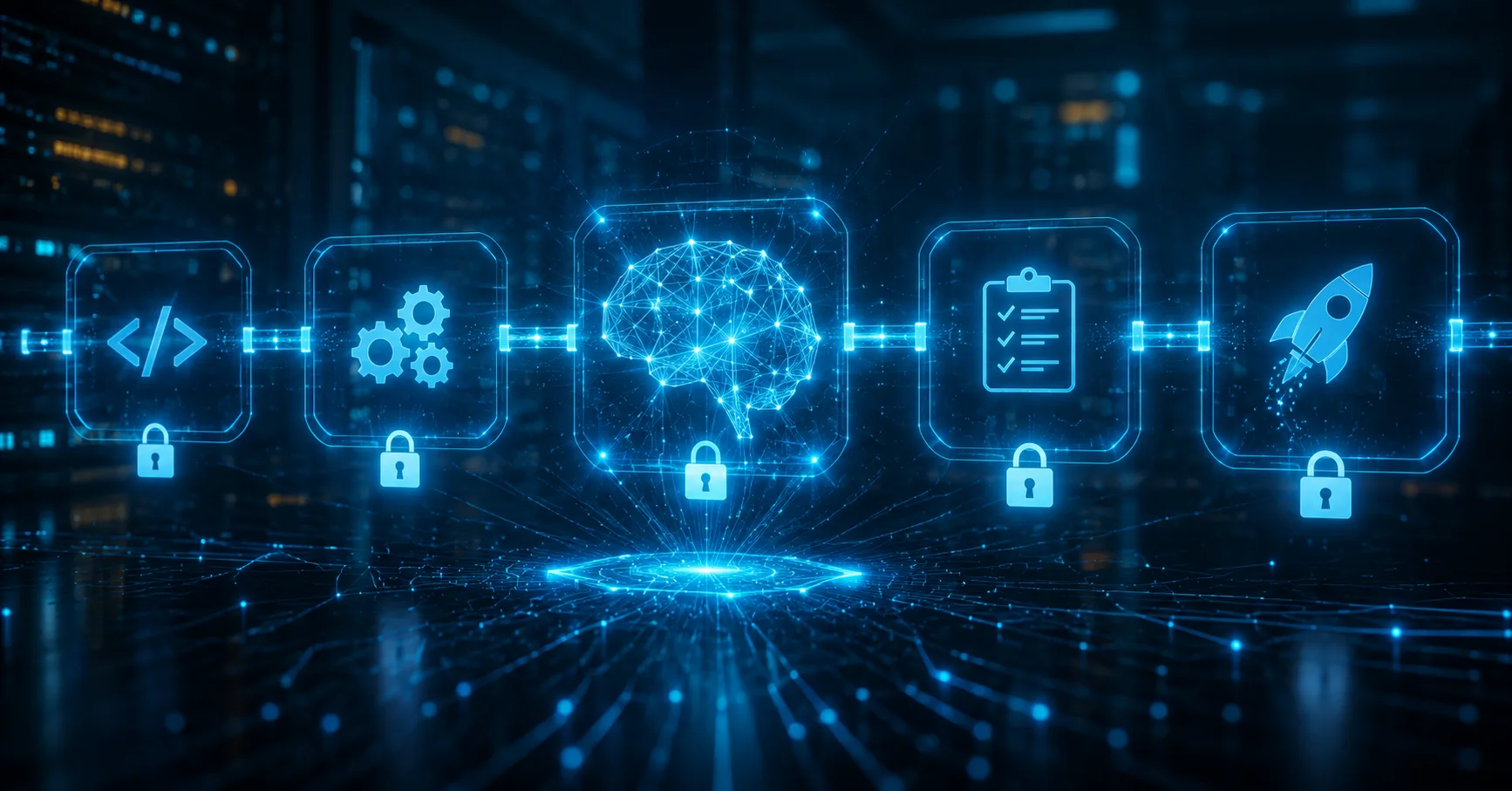
AI in the SDLC has stopped being a promise and become a reality in the teams I lead. Artificial intelligence already writes code, generates tests and reviews pull requests. The question is no longer whether to use it, but how to integrate it into the software development life cycle without sacrificing the security and traceability that regulated environments demand.
What changes when AI enters the development cycle
The classic SDLC (requirements, design, development, testing, deployment and maintenance) remains valid, but each phase is transformed when AI is introduced. Speed increases, yes, but so do the risks if it is not well governed. An assistant that generates code can introduce vulnerabilities or unaudited dependencies at a scale that was previously unthinkable.
That is why integrating AI into the SDLC is not about dropping a tool on the team, but about redesigning the controls of each phase so that speed does not eat into security.
Phase by phase: where AI adds value and what to watch
Requirements and design
AI helps to write user stories, detect contradictory requirements and propose architectures. The risk here is blind trust: a design suggested by AI needs expert human review, especially when there are security or compliance implications.
Development
This is where AI in the SDLC is most noticeable. Code assistants speed up writing, but require clear policies on what is accepted without review and what is not. I approach this governance the same way as AI-assisted development: with explicit guardrails and mandatory peer review on critical code.
Testing and security
Automatic test generation and AI-assisted static analysis raise coverage. Even so, security must follow a risk management in GenAI projects approach: validating that the generated tests cover the real edge cases and not just the obvious ones.
AI governance and compliance in the SDLC
In regulated sectors, integrating AI into development requires documenting which tools are used, on what data and with what controls. The EU AI Act and security frameworks require traceability: who approved what, which outputs were validated and how the generated dependencies are managed. Without that record, speed turns into technical and regulatory debt.
From the traditional SDLC to the AI development life cycle
It is worth distinguishing two things that are often mixed up. One is using AI as a tool within a classic SDLC, for example with an assistant that generates code. Another, very different, is managing the development life cycle of an AI system, where the model, the data and the learned behaviour are the product itself. In the first case we adapt known practices; in the second we need new disciplines such as data validation, model version control and monitoring of drift in production.
When I lead projects where the AI system is the deliverable, I insist that data quality trumps algorithm sophistication. A mediocre model with excellent data almost always beats a brilliant one fed with dirty data. That is why I integrate a solid layer of data governance for AI from the outset, defining who is responsible for each source, how it is validated and how often it is reviewed.
Common mistakes when bringing AI into development
The most repeated mistake I see is treating AI-generated code as if it were infallible. It is not. An assistant can produce a function that compiles and passes the basic tests, but that carries a subtle vulnerability or an incompatible licence. That is why I keep human review as a mandatory stage, not an optional one, and reinforce static security analysis in the pipeline.
The second mistake is not measuring. If you introduce AI to speed up development, define beforehand what success means: less time per story, fewer defects in production or greater test coverage. Without clear metrics, the feeling of going faster can hide a growing technical debt. And the third mistake, perhaps the most expensive, is skipping traceability: in regulated environments you have to be able to explain where each system decision came from, and that is designed from the first sprint, not at the end.
There is a point I always repeat when I integrate AI into the development cycle: automation does not replace human judgement, it amplifies it. An assistant can suggest code, detect a vulnerable pattern or generate tests, but the decision about what goes into production remains the team’s responsibility. That is why I advocate configuring these tools as a supervised co-pilot, with human review at the critical points and traceability of what the model proposes. Framed this way, AI speeds up secure development without diluting the responsibility of whoever signs off each delivery.
Conclusion: speed with control
AI in the SDLC, well managed, is a huge advantage, but only if speed is accompanied by control. My recommendation, after leading teams in banking and insurance, is clear: redesign the controls before you accelerate. Artificial intelligence must strengthen the secure development cycle, never weaken it.
Frequently asked questions about AI in the SDLC
It is the integration of artificial intelligence into the phases of the software development life cycle (requirements, design, development, testing, deployment and maintenance) to speed up the work while maintaining security and traceability.
Above all in development (code assistants) and testing (test generation and static analysis), although it also helps in requirements and design. In all of them, expert human review remains essential.
Mainly vulnerabilities in the generated code, unaudited dependencies and blind trust in unreviewed suggestions. They are mitigated with review policies, explicit guardrails and traceability of decisions.
In regulated environments you have to document which tools are used, on what data and with what controls, in line with the EU AI Act. Traceability of approvals and validations is mandatory to avoid accumulating regulatory debt.
A programme to run with little margin for error? See how I have done it.
See the nine case studies